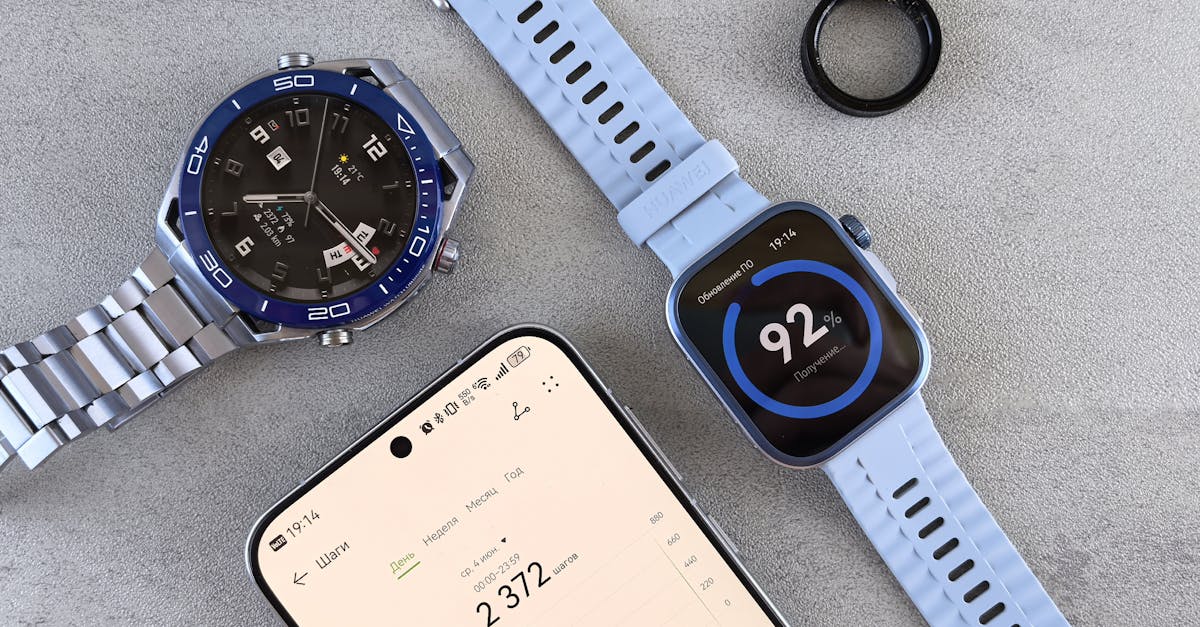
You’ve been eyeing smart rings, intrigued by their sleek design and the promise of health tracking without the bulk of a smartwatch. Perhaps you’re an athlete looking for a less intrusive way to monitor workouts, or maybe you simply want to gain more insight into your daily activity without constantly checking a screen. The marketing often focuses on sleep tracking, which smart rings do exceptionally well, but for active individuals, there’s a whole world of data beyond just REM cycles that these tiny devices can capture. The mistake I see most often is new users getting a smart ring for general ‘activity’ without understanding how to truly leverage it for their specific fitness needs. They treat it like a simplified fitness tracker, missing out on the nuanced metrics that can actually make a difference.
Key Takeaways
- Prioritize a smart ring’s raw sensor data and processing capabilities over just its advertised features for accurate activity tracking.
- Focus on metrics like Heart Rate Variability (HRV) and activity-specific recovery insights to inform your training regimen.
- Evaluate a ring’s comfort, durability, and waterproofing specifically for your most common activities, not just general wear.
- Look for rings that offer open data export or robust third-party app integrations to avoid being locked into a single ecosystem.
Prioritize Raw Sensor Quality Over Marketing Hype
When I first started experimenting with smart rings for activity tracking, my biggest misconception was that all ‘activity tracking’ was created equal. I assumed if it counted steps and calories, it was doing its job. What changed everything for me was looking beyond the surface-level marketing and diving into the actual sensor technology. Many budget smart rings boast impressive feature lists, but the quality of their photoplethysmography (PPG) sensors (which measure heart rate) and accelerometers can vary wildly. A ring might claim to track heart rate during a run, but if the PPG sensor struggles with motion artifact, the data will be riddled with inaccuracies, making it useless for serious training.
In my experience, a superior optical heart rate sensor, often paired with advanced algorithms, is paramount for any activity beyond a leisurely walk. This isn’t just about reading your pulse; it’s about detecting subtle changes in blood flow during high-intensity intervals or accurately measuring resting heart rate for recovery assessment. Before committing, I always search for independent reviews that specifically test the ring’s accuracy against medical-grade equipment or established fitness trackers during varied activities like cycling, weightlifting, and running. A ring that accurately captures rapid heart rate changes during a sprint, for instance, is far more valuable than one that just gives a smoothed average.
Leverage Heart Rate Variability (HRV) for Recovery and Performance
While steps and calories are foundational, the true power of a smart ring for an active individual lies in its ability to provide nuanced recovery metrics, with Heart Rate Variability (HRV) being chief among them. HRV, simply put, is the variation in time between your heartbeats. A higher, healthier HRV generally indicates a well-recovered nervous system, ready for intense training. A consistently lower HRV, however, might signal overtraining, stress, or impending illness, prompting you to dial back your workout intensity or opt for a rest day.
What changed everything for me was when I started paying attention to my HRV trends, not just daily numbers. After a particularly grueling cycling race, my HRV dipped significantly for two days. Instead of pushing through my planned high-intensity interval training, I opted for active recovery rides and noticed my HRV gradually climb back up. This direct feedback allowed me to adjust my training on the fly, preventing burnout and improving my overall performance in subsequent weeks. Many smart rings now offer advanced HRV analysis, often integrating it into a broader ‘readiness score.’ This score consolidates HRV with other metrics like sleep quality and recent activity load, giving you an actionable recommendation for your day’s training intensity. Don’t just track it; interpret it. A good smart ring will present this data in an easily digestible format and, crucially, explain what it means for your performance and recovery.
Evaluate Activity-Specific Comfort and Durability
Unlike a smartwatch that you might take off for certain activities or worry about scratching, a smart ring is designed for continuous wear. This means its comfort and durability for your specific activities are non-negotiable. I’ve seen many people choose a ring based purely on its aesthetic or general health tracking features, only to find it irritating during a heavy weightlifting session or easily damaged during outdoor adventures. The form factor, while discreet, can become a hindrance if it’s too bulky or if the material isn’t sweat-resistant and scratch-proof.
For example, if you lift weights, ensure the ring’s material and profile won’t pinch or feel uncomfortable when gripping a barbell or dumbbell. I found that rings with a completely smooth, rounded outer surface fare much better in these scenarios. If you’re a swimmer, 5ATM or higher water resistance is essential, not just for a quick shower but for sustained submersion without compromising the electronics. Runners should consider how the ring feels on their finger during repetitive motion—some rings, if slightly ill-fitting, can chafe. The ideal smart ring should become an extension of your finger, almost unnoticeable during your most intense activities. Don’t underestimate the mental friction of constantly adjusting or worrying about your wearable; it detracts from your focus and ultimately its utility.
Seamless Integration: Beyond the Native App
Another pitfall I’ve observed is users becoming locked into a smart ring’s proprietary app, limiting the utility of their data. While native apps often provide a clean interface and interpretative insights, for serious activity tracking, you need your data to play nice with other platforms. In my experience, the true value of a smart ring’s data multiplies when it can integrate with your existing fitness ecosystem—think Strava for runners/cyclists, Garmin Connect, or even nutrition tracking apps.
Before purchasing, investigate the ring’s integration capabilities. Does it export data to Apple Health or Google Fit? Does it have direct connections to popular fitness apps? The more open the ecosystem, the more control you have over your data and how it contributes to your overall health and performance picture. For example, syncing my sleep and HRV data from my smart ring to my cycling app allows me to see how my recovery directly impacts my power output and endurance. Without this cross-platform visibility, I’d be looking at isolated data points, missing crucial correlations. This ability to centralize and analyze data from various sources is what elevates a smart ring from a simple gadget to a powerful training tool.
Look for Continuous Heart Rate and Blood Oxygen Monitoring
Beyond just spot checks, continuous heart rate monitoring (cHRM) is critical for understanding your body’s response during activities and throughout your day. Many smart rings offer cHRM, but the sampling rate and accuracy during dynamic movement are what truly matter. A ring that samples every few minutes during a workout won’t capture the intensity peaks and valleys that are vital for effective training and performance analysis. Look for rings that offer real-time, high-frequency heart rate data for activities.
Additionally, blood oxygen saturation (SpO2) monitoring, particularly during sleep, can be a crucial indicator of respiratory health and recovery. While not strictly an activity metric, poor nighttime SpO2 can impact your daytime energy levels and exercise capacity. Some advanced smart rings now incorporate this. In my experience, a comprehensive picture of your physiological state, both during activity and rest, provides the most actionable insights. For example, noticing a consistent drop in my average SpO2 after a long travel day prompted me to prioritize sleep and hydration, which then improved my readiness score for my next training session. These deeper metrics provide layers of understanding that go far beyond basic step counting.
Frequently Asked Questions
How accurate are smart rings compared to smartwatches for activity tracking?
Smart rings are generally comparable to smartwatches in accuracy for basic metrics like steps and resting heart rate, often benefiting from a more stable position on the finger. However, for dynamic, high-intensity activities, the accuracy can vary significantly depending on the quality of the ring’s sensors and algorithms. Always check independent reviews comparing specific models against chest straps or medical devices during relevant activities for the most reliable assessment.
Can smart rings replace dedicated GPS sports watches for runners or cyclists?
For precise distance and pace tracking outdoors, smart rings typically do not have built-in GPS and rely on your phone’s GPS. This means they can’t fully replace a dedicated GPS sports watch if you prefer to run or cycle phone-free. However, for heart rate, recovery, and overall activity load insights, a good smart ring can be a valuable complement or even a primary tool for those who already carry their phone or train indoors.
Do smart rings track specific types of workouts like weightlifting or swimming?
Most smart rings can detect and categorize general activity, but their ability to track specific types of workouts varies. Some advanced rings can auto-detect weightlifting sets and reps (though accuracy can be mixed) or distinguish between swim strokes. For precise tracking of complex movements or highly varied activities, you might still need to manually log or rely on a connected app. Always verify if a ring explicitly supports and accurately tracks your primary workout types.
How long does a smart ring’s battery typically last with continuous activity tracking?
Battery life for smart rings with continuous activity tracking typically ranges from 3 to 7 days on a single charge. This can be influenced by how frequently it records data (e.g., continuous vs. intermittent heart rate monitoring), the intensity of usage, and whether it has advanced features like SpO2 tracking. Charging usually takes about an hour.
Is the subscription model common for smart rings, and is it worth it for activity tracking?
Many smart ring manufacturers now offer a subscription model to unlock advanced features, in-depth data analysis, and personalized insights, particularly for recovery and performance. Whether it’s worth it depends on your individual needs. For casual users, the free tier might suffice. For serious athletes or those looking for comprehensive performance optimization, the insights provided by a subscription (like detailed readiness scores and trend analysis) can be highly valuable and help prevent overtraining or injury.
In my journey with smart rings, the biggest lesson has been that while the technology is impressive, its true utility for activity tracking comes down to a few core principles: understanding the quality of the data, leveraging advanced metrics like HRV for recovery, ensuring physical compatibility with your active lifestyle, and integrating the data into a holistic fitness picture. Don’t just track; learn from your data. Begin by identifying your most critical activity metrics and then research which smart rings truly excel in delivering those with precision and actionable insights.